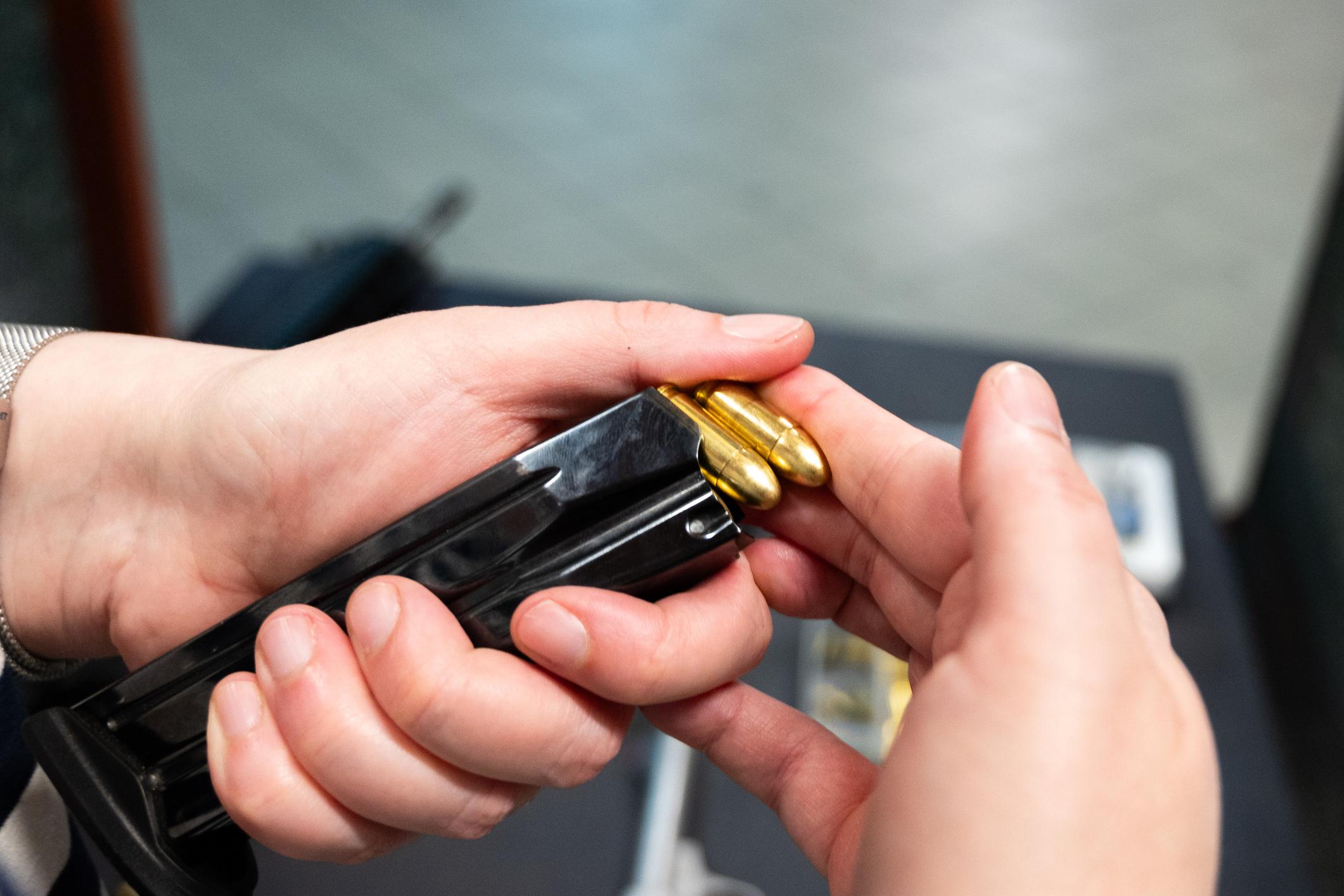
Magazine Capacity Limits:
Policy Theatre That Leaves Australians Less Safe
Australians are told that new firearm restrictions are urgently needed to keep the community safe. Among the most frequently recycled proposals is limiting magazine capacity. It is presented as a common sense response - fewer rounds, fewer casualties - and used to signal decisive leadership in moments of public fear.
But this argument does not survive serious scrutiny. Magazine capacity limits are not an evidence-based public safety measure. They are a familiar form of policy theatre: highly visible, emotionally appealing, and largely ineffective against the people they are claimed to target.
These debates do not persist because the evidence is unclear. They persist because redirecting public attention towards firearms accessories is easier than confronting failures in intelligence, enforcement, and prevention. Ordinary Australians pay the price for that redirection.
What magazine capacity limits really regulate
Magazine capacity limits regulate an accessory, not behaviour. They do nothing to assess intent, disrupt planning, or prevent radicalisation. They assume that the mechanics of a firearm - rather than the decisions of the person using it - are the decisive factor in serious violence.
For responsible firearm owners, these limits function as another compliance requirement. For criminals and terrorists, they function as an inconvenience that can be bypassed in seconds. Public safety policy that primarily affects compliant people while leaving violent offenders untouched is not risk-based regulation - it is misdirected regulation.
Governments are well aware of this distinction. Continuing to advance these proposals despite that knowledge is not caution; it is a failure to engage honestly with the problem.
Why criminals and terrorists are not constrained by magazine limits
Serious offenders do not plan their actions around legislative preferences. If someone is willing to commit murder or acts of terrorism, they are already prepared to ignore laws far more serious than an equipment restriction.
In practical terms, magazine capacity limits fail because:
- Reloading takes seconds not minutes
- Offenders carry multiple magazines as a matter of course
- Criminal supply chains do not comply with lawful capacity limits
- Terrorism is adaptive and rarely reliant on a single method
None of these points are speculative. They are well understood by police, military, and security professionals. Pretending otherwise misleads the public and undermines trust in policymaking.
Australia already has strict firearm regulation
Australia’s firearms framework already includes licensing, police vetting, category-based restrictions, and secure storage requirements. Magazine capacity is already regulated by firearm type and jurisdiction. Further reductions do not meaningfully change risk - they merely increase the regulatory burden on people who are not responsible for violent crime.
When governments claim that ever-tighter restrictions on compliant ownership will prevent terrorism or organised violence, they shift responsibility away from where it belongs. Firearms laws cannot compensate for failures to identify and disrupt known threats.
The “Pause” Argument: A Convenient Myth That Doesn’t Reduce Harm
The most common defence of magazine capacity limits is the claim that forcing an attacker to reload creates a pause - a moment in which people can escape or intervene. It is a compelling soundbite, and it is repeated often. It is also fundamentally flawed.
Reloading is not the decisive factor people imagine it to be. For anyone who has handled a firearm, a reload is measured in seconds. For someone who has planned an attack, it is an expected and rehearsed action. It does not meaningfully alter the sequence of events in a violent incident.
More importantly, violent acts are not continuous streams of firing. They involve movement, decision-making, target selection, communication, and repositioning. Pauses already exist. A forced reload does not introduce a new protective barrier - it simply occurs within a broader flow of activity that remains driven by intent.
Planning defeats simplistic restrictions
The central failure of magazine capacity limits is that they assume offenders will not adapt. But adaptation is the defining feature of criminal and terrorist behaviour.
Attackers plan around constraints as a matter of course. That planning can include:
- carrying additional magazines
- choosing environments that restrict intervention
- selecting timing to minimise resistance
- preparing alternative methods or escalation options
A policy that relies on offenders failing to adapt is not a serious public safety strategy. It is an exercise in hope rather than prevention.
This is why, globally, serious violence takes many forms. Where one method is restricted, another is adopted. Fixating on the technical characteristics of firearms does not remove intent, and it does not eliminate opportunity.
Equipment is not the driver of violence
One of the most damaging aspects of the magazine capacity debate is the way it frames violence as a problem of hardware rather than human behaviour. This framing is politically useful, but it is analytically wrong.
Violence occurs because of people - their decisions, their motivations, and the systems that fail to intervene early. Policies that focus on equipment after the fact avoid uncomfortable questions about whether warning signs were missed, intelligence was ignored, or existing powers were not used.
Governments do not lack the information needed to understand this. Reviews of violent incidents repeatedly identify prevention, intelligence-sharing, and intervention failures. Yet the response is often to recycle measures that target lawful ownership because they are easier to explain and less confronting to implement.
Redirection has consequences
This redirection is not neutral. Every time public debate is steered towards magazine limits, attention is drawn away from:
- why known risks were not acted upon
- why existing intervention mechanisms failed
- why criminal networks continue to supply weapons unlawfully
- why frontline policing and intelligence remain under-resourced.
When these questions are avoided, risk is not reduced - it is left unmanaged. The public is reassured, but not protected.
Who Pays the Price, and What Real Public Safety Requires
Magazine capacity limits do not fall on criminals or terrorists. They fall on ordinary Australians who already comply with some of the most regulated firearms laws in the world. These are people who have been vetted by police, who store firearms securely, and who participate in lawful activities such as sport shooting, hunting, and collecting.
They are not the source of violent crime or terrorism. Yet they are repeatedly treated as a problem to be managed because they are visible, compliant, and politically safe to regulate.
The cost is not just financial - it is risk
Every ineffective restriction carries a cost. Legislation must be drafted, enforced, and administered. Property must be surrendered, modified, or compensated. Compliance systems must be expanded. All of this consumes public resources.
More importantly, it consumes attention.
When governments focus on magazine capacity limits, they divert time, funding, and political energy away from measures that actually reduce harm, including:
- intelligence gathering and threat monitoring
- early intervention using existing legal powers
- disruption of criminal firearm supply
- frontline policing and investigative capacity
- prevention and deradicalisation efforts
This is not simply inefficient. It is dangerous. Leaving genuine risks unaddressed while pursuing policies that feel reassuring increases the likelihood that warning signs will again be missed.
Misinformation drives bad policy
These debates continue because misinformation is allowed to flourish. The public is repeatedly told that reducing magazine capacity will reduce violence, despite the absence of evidence supporting that claim in the Australian context.
This creates a distorted policy environment where facts are subordinate to optics. Once misinformation becomes embedded, it is used to justify further restrictions, each one compounding the original error.
Education is necessary precisely because the public conversation has been redirected away from evidence and towards fear-based assumptions. That redirection benefits politicians seeking cover, not communities seeking safety.
This is a failure of responsibility, not a lack of ideas
Governments already possess the tools required to improve public safety. They have intelligence agencies, policing powers, monitoring mechanisms, and intervention options. When those systems fail, the answer is not to regulate lawful property more aggressively - it is to fix the systems that failed.
Continuing to promote magazine capacity limits in the face of clear evidence of their ineffectiveness is not caution. It is a failure of responsibility.
Australians deserve public safety policy grounded in evidence, not distraction. They deserve honest conversations about what actually prevents violence, not recycled proposals that shift blame and avoid accountability. Until governments stop mistaking visibility for effectiveness, these debates will continue - and ordinary Australians will continue to bear the cost of politics that prioritises reassurance over real protection.
"Magazine Capacity Limits: Policy Theatre that Leaves Australians Less Safe," SUA Shooters Union Australia, 23 December 2025